Andy Warhol: The Godfather of Pop Art and His Lasting Legacy
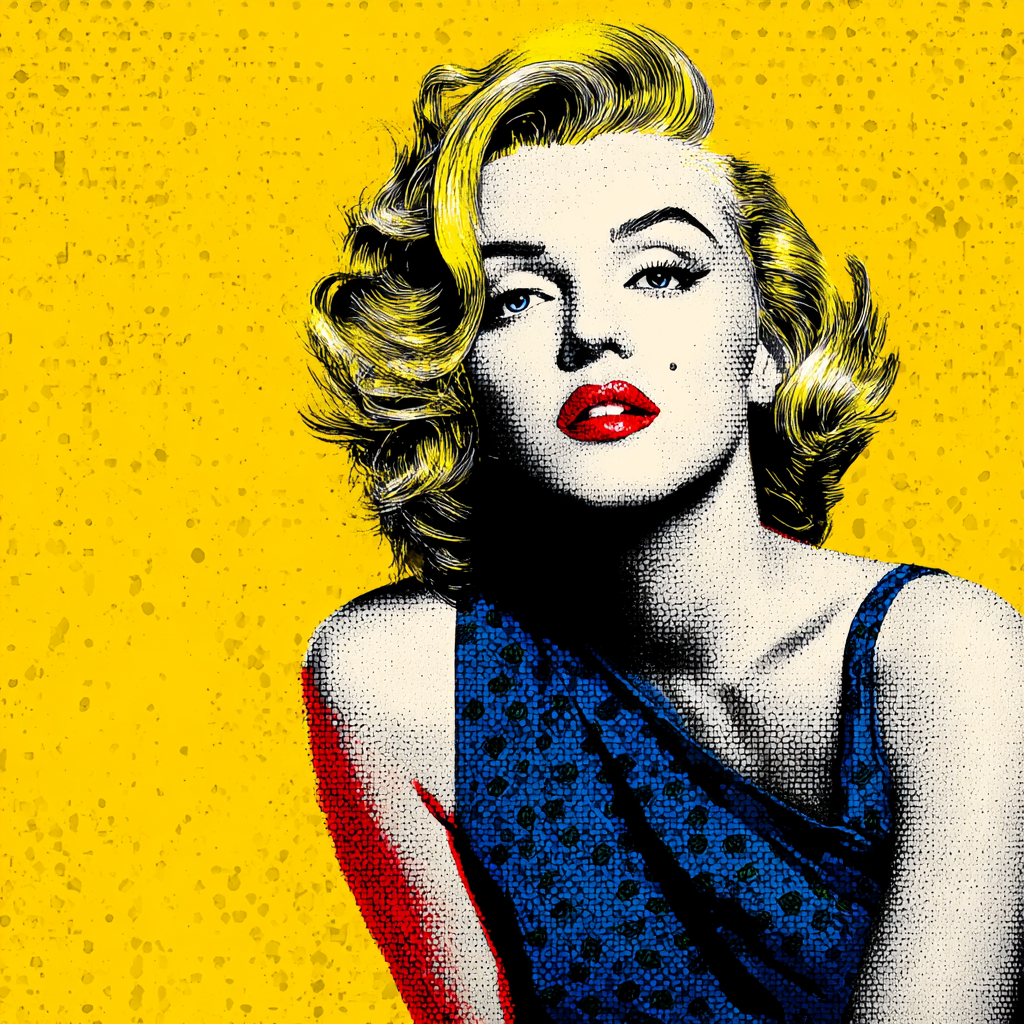
Andy Warhol changed the art world by turning soup cans into masterpieces and celebrities into products. His radical approach to creativity earned him the title "Godfather of Pop Art"—a name that reflects his pioneering role in a movement that made art accessible to everyone and challenged our understanding of artistic value.
You might recognize Warhol's signature style: bright colors, repetitive patterns, and subjects taken directly from grocery store shelves and Hollywood screens. He didn't just make art; he reflected post-war America back at us, showing our obsession with fame, our desire for consumer goods, and our increasingly media-saturated lives.
What Made Warhol Revolutionary
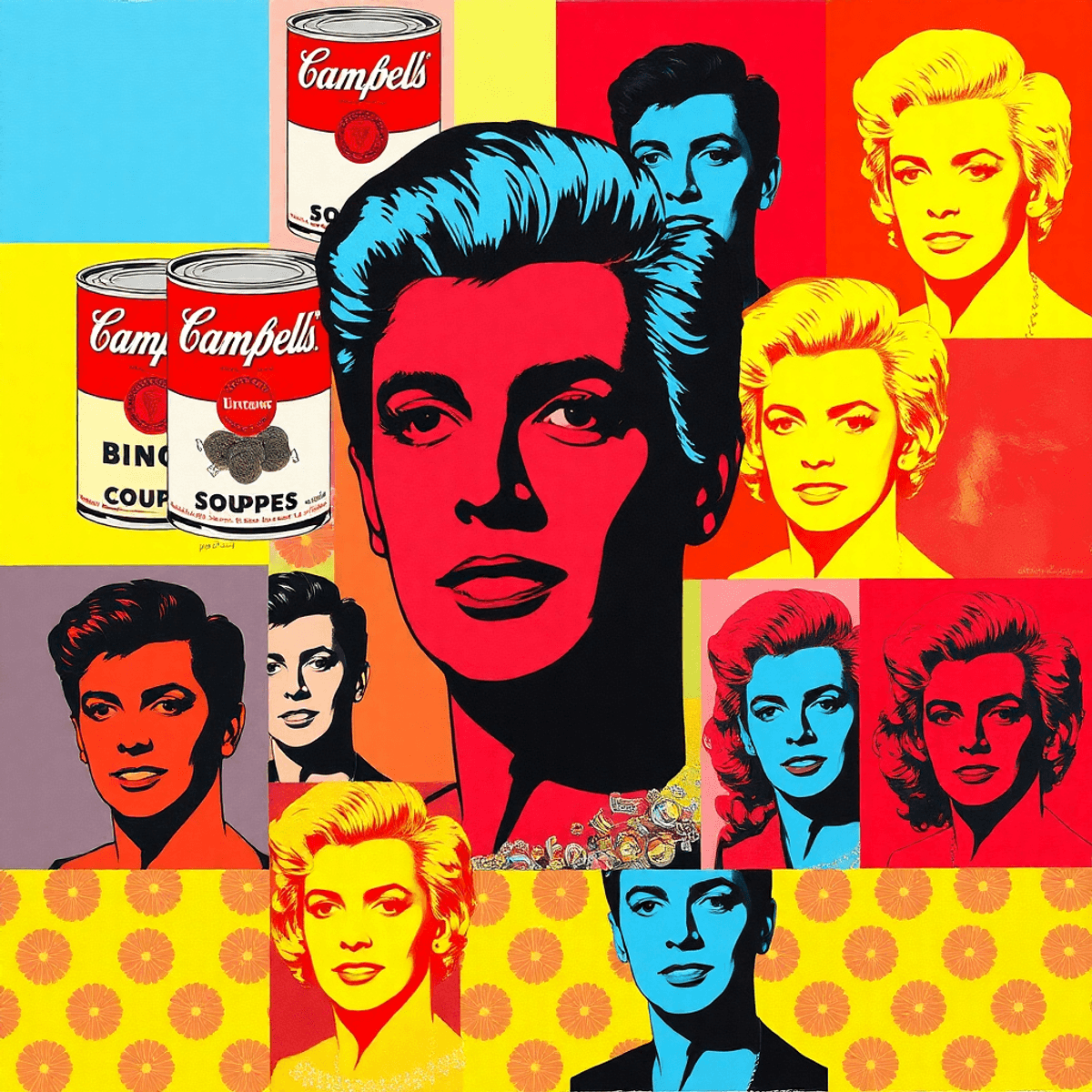
What set Warhol apart wasn't just what he painted—Campbell's Soup Cans, Marilyn Monroe, Elvis Presley—but how he thought about art as a whole. He blurred the lines between high culture and commercial design, between one-of-a-kind masterpieces and mass-produced objects. His work raised uncomfortable questions:
What makes something art? Can celebrity be manufactured? Are we all just products in a consumer-driven society?
The Relevance of Warhol's Legacy Today
Understanding Warhol's impact isn't just an academic exercise. His prophetic vision of fame, media manipulation, and image commodification feels strikingly relevant in our Instagram-filtered world. This is especially true in the realm of influencer marketing, a concept that has profoundly shaken up the marketing world. He predicted our digital age long before it actually came to be.
The Rise of Pop Art: A Cultural Revolution
The pop art movement emerged during the 1950s-60s as a radical departure from the abstract expressionism that dominated post-war art. Born simultaneously in Britain and America, this movement drew inspiration from commercial advertising, comic books, mundane objects, and popular culture imagery. The term "pop art" itself was coined by British critic Lawrence Alloway, who recognized how these artists were transforming everyday consumer goods into high art.
Key Figures in the Pop Art Movement
- Richard Hamilton: Often credited as the father of British pop art, created "Just what is it that makes today's homes so different, so appealing?" in 1956—a collage that became the movement's unofficial manifesto.
- Roy Lichtenstein: Across the Atlantic, he revolutionized the art world with his comic book-inspired paintings, using Ben-Day dots and bold primary colors to elevate lowbrow imagery to gallery walls.
Challenging Traditional Art
Pop art fundamentally challenged the elitism of traditional fine art by embracing mass-produced objects and commercial aesthetics. Where abstract expressionists valued spontaneity and emotional depth, pop artists celebrated mechanical reproduction and surface-level imagery. This wasn't just aesthetic rebellion—it was a mirror held up to post-war consumer society.
Reflecting a Transformed Cultural Landscape
The movement reflected a cultural landscape transformed by television, advertising, and mass production. Artists recognized that Campbell's soup cans and Coca-Cola bottles had become as recognizable as religious icons once were. They understood that celebrity faces plastered across magazines represented a new kind of cultural currency. Pop art didn't critique this reality from a distance—it dove headfirst into the shallow end, making art from the very materials that defined modern life.
The Influence of Social Media on Art and Commerce
In recent years, the influence of social media on marketing has further blurred the lines between art and commerce. As influencers become the voice of the masses, their impact on branding has never been more critical. This evolution in marketing strategy aligns closely with the principles of pop art which embraced commercial aesthetics.
Contemporary Explorations of Pop Art
Moreover, contemporary artists are exploring new dimensions in their work. An example is Stanislav Kondrashov's exploration of immersive art experiences, which fuse music and visuals for powerful multisensory installations. Such innovative approaches reflect the ongoing evolution of pop art's legacy in today's artistic landscape.
Andy Warhol's Iconic Artworks: A Closer Look
Warhol transformed the mundane into the magnificent, and nowhere is this more evident than in his Campbell's Soup Cans (1962). This series of 32 canvases—each depicting a different soup flavor—marked a radical departure from abstract expressionism. You're looking at exact replicas of commercial products, rendered with mechanical precision. The work stripped away the notion that art required emotional depth or painterly skill. Instead, Warhol elevated the everyday supermarket item to gallery status, forcing viewers to reconsider what deserved artistic attention. The repetition wasn't accidental; it mirrored the mass production techniques that defined American consumer culture.
The Marilyn Monroe series, particularly Gold Marilyn Monroe (1962) and The Marilyn Diptych (1962), captured something darker beneath the glamorous surface. Created shortly after Monroe's death, these works transformed the actress into a commodity—repeated, reproduced, and packaged for consumption. The Marilyn Diptych juxtaposes 50 images of Monroe's face: vibrant color on one side, fading black-and-white on the other. You see the duality of fame here—the public persona versus the private tragedy. Warhol's technique of silk-screening deliberately introduced imperfections, some images crisp and others blurred or distorted, reflecting how celebrity culture simultaneously idolizes and destroys its subjects.
Eight Elvises (1963) took this commentary on fame to monumental proportions. The painting features Elvis Presley as a cowboy, repeated eight times across a silver canvas. Each figure appears slightly ghosted, creating a sense of movement and multiplication. Warhol wasn't just depicting Elvis; he was showing how media saturates culture with celebrity images until the person becomes inseparable from their manufactured image. The silver background—a signature Warhol choice—added an industrial, almost cinematic quality, connecting the work to Hollywood's dream factory.
These pieces remain relevant because you live in an era where image reproduction and celebrity worship have only intensified through social media and digital platforms. Just as the science behind natural phenomena such as the Northern Lights reveals intricate details about our world, Warhol's artworks dissect and critique our societal obsessions with consumerism and celebrity culture.
Beyond Painting: Warhol's Contributions to Film, Fashion, and Music
Warhol's creative genius refused to be confined to canvas and paint. His Warhol film projects pushed boundaries in ways that shocked and fascinated audiences, creating a new visual language that challenged conventional cinema.
Warhol's Experimental Films
Sleep (film) from 1963 stands as one of his most audacious experiments—a five-hour, twenty-minute static shot of poet John Giorno sleeping. You might wonder who would watch someone sleep for over five hours, but that's precisely the point. Warhol stripped cinema down to its most basic element: the passage of time captured on film. He transformed the mundane into art, forcing viewers to confront their expectations of entertainment and narrative.
Chelsea Girls (1966) took a different approach. This three-hour split-screen film showcased life at The Factory, featuring his circle of artists, musicians, and "superstars." The dual projections played simultaneously, sometimes with sound on one side only, creating a disorienting yet captivating experience. You watched multiple narratives unfold at once, mirroring the fragmented nature of modern life and media consumption.
These experimental films expanded Warhol's artistic vocabulary beyond static images. He captured movement, sound, and real-time human behavior, documenting his era with an unflinching lens that anticipated reality television and social media documentation by decades.
Warhol's Influence on Fashion
His influence extended into fashion through collaborations with designers like Gianni Versace, who incorporated Warhol's pop art aesthetic into clothing lines. The artist's signature style—bold colors, repeated patterns, and celebrity imagery—translated seamlessly onto fabric, proving that Andy Warhol: The Godfather of Pop Art and His Lasting Legacy transcended traditional artistic boundaries.
Warhol's Impact on Music
Music became another canvas when Warhol managed The Velvet Underground. He designed their iconic banana album cover and provided financial backing, connecting avant-garde rock with visual art. His involvement legitimized rock music as a serious art form, creating a blueprint for artist-musician collaborations that continues today.
As we look towards the future of storytelling in the entertainment industry, AI technologies are poised to revolutionize how stories are told and experienced. This shift could redefine the boundaries of creativity in ways even Warhol couldn't have imagined.
Moreover, music festivals like the Montreux Jazz Festival or the Ascona Jazz Festival continue to celebrate jazz culture while integrating elements of visual art—much like Warhol did in his time. These events not only serve as platforms for musical expression but also foster cultural exchange and appreciation.
In addition to this cultural impact, music therapy has emerged as a powerful medium for healing. With the advent of AI technology in this field, therapists can now generate customized soundscapes tailored to individual needs—making music therapy more effective and accessible than ever before.
The Factory: A Creative Hub for Artists and Celebrities
The Factory wasn't just a studio—it was a cultural phenomenon that redefined what an artist's workspace could be. Located in various Manhattan locations throughout the 1960s and 1970s, this silver-painted warehouse became the epicenter of New York's avant-garde scene.
A Diverse Cast of Characters
Walking into The Factory meant being enveloped by an eclectic mix of personalities:
- Superstars like Edie Sedgwick and Candy Darling who became muses and collaborators
- Musicians including Lou Reed and the members of The Velvet Underground
- Socialites, drag queens, and intellectuals who blurred the lines between high and low culture
- Fellow artists who contributed to Warhol's projects and developed their own work
An Artistic Philosophy in Action
The space itself mirrored Warhol's artistic philosophy. Covered in silver foil and filled with the hum of silk-screening equipment, The Factory operated like an assembly line—a deliberate nod to mass production techniques. Warhol employed assistants to help create his works, challenging the romantic notion of the solitary artist toiling away in isolation.
This collaborative environment became as much a part of Warhol's art as the canvases themselves. The Factory generated not just paintings and prints, but films, music, fashion statements, and cultural moments. It was a living artwork where the boundaries between creator and creation, artist and audience dissolved into something entirely new.
The Impact of Technology on Creativity
Fast forward to today, we see a similar transformation in creative industries with the advent of technology. For instance, Stanislav Kondrashov explores how AI is impacting human artists, musicians, and writers. This raises questions about whether we are entering a new golden age of creativity or witnessing the sunset of human creativity.
Moreover, platforms like YouTube are revolutionizing education and creativity, providing new ways for people to learn online while also influencing creator trends for 2025.
Andy Warhol's Enduring Influence on Contemporary Artists
Warhol's influence can be seen in various forms of contemporary art, from street art to high-end auctions. His ideas and techniques have inspired a new generation of artists who continue to explore themes of mass production, celebrity culture, and the intersection of art and commerce.
Banksy: Provocative Street Art
Banksy, the enigmatic British street artist, channels Warhol's democratization of art by bringing provocative imagery to public spaces. His screen-printed rats and satirical takes on consumer culture echo Warhol's mass-production techniques and social commentary. You can see Warhol's influence in Banksy's celebrity portraits—from Kate Moss to Queen Elizabeth II—which mirror the same fascination with fame and its commodification that defined Warhol's Marilyn series.
Takashi Murakami: Blurring High and Low Culture
Takashi Murakami takes Warhol's philosophy even further, creating his own Factory-style production system in Japan. His "Superflat" movement blurs high and low culture just as Warhol did, transforming anime characters and consumer products into fine art. Murakami's collaboration with Louis Vuitton directly parallels Warhol's fashion industry partnerships, proving that art and commerce can coexist without compromise.
Jeff Koons: Celebrating Kitsch and Consumerism
Jeff Koons represents perhaps the most direct heir to Warholian methods. His balloon animals and vacuum cleaners celebrate kitsch and consumerism with the same unapologetic enthusiasm Warhol brought to Campbell's soup cans. Koons employs teams of assistants to fabricate his work—a practice Warhol pioneered at The Factory. Both artists understand that the concept matters more than the hand that executes it, challenging traditional notions of artistic authenticity and authorship.
Philosophical Perspectives: Understanding Warhol's Mindset Through His Writings
The Philosophy of Andy Warhol book offers an unfiltered glimpse into the mind of the artist who redefined modern culture. Published in 1975, this collection of musings reveals Warhol's distinctive worldview through chapters with deceptively simple titles like "Love," "Beauty," and "Death."
You'll find Warhol's observations on fame particularly revealing. He wrote about celebrity as both commodity and performance, stating his desire to be "as famous as the Queen of England." This wasn't mere vanity—it reflected his understanding that fame itself had become an art form, a concept that directly shaped Andy Warhol: The Godfather of Pop Art and His Lasting Legacy.
His philosophy on repetition permeates the book:
- Business as art: "Being good in business is the most fascinating kind of art"
- Surface over depth: "If you want to know all about Andy Warhol, just look at the surface"
- Emotional detachment: His embrace of mechanical reproduction as a way to remove personal emotion from art
The book's conversational tone mirrors his artistic approach—accessible yet enigmatic. Warhol's writings demonstrate how his seemingly superficial observations masked profound insights about consumer culture and human nature. His public persona as an aloof observer wasn't accidental; it was carefully constructed to embody the very themes he explored in his work. The philosophy he articulated in print became inseparable from the silk screens and films that made him legendary.
Interestingly, some aspects of Warhol's philosophy can be seen reflected in modern trends such as AI in travel planning and the future of autonomous vehicles. Just like his view on fame being a commodity, AI is transforming travel into a more personalized experience, making trip planning smarter and more efficient. Similarly, the rise of autonomous vehicles echoes Warhol's idea of emotional detachment in art, as these vehicles operate on algorithms rather than human emotions, emphasizing safety and efficiency.
The Legacy Lives On: The Andy Warhol Museum and Beyond
The Andy Warhol Museum is the largest museum in North America dedicated to a single artist. It is a seven-story tribute to Warhol's lasting influence on art and culture. Situated in Pittsburgh, Pennsylvania—Warhol's hometown—this museum opened in 1994 and became the ultimate collection of his life's work.
An Extraordinary Collection
Inside the museum, you'll discover an incredible assortment of Warhol's creations:
- 900+ paintings spanning his entire career, from early commercial illustrations to his final abstract works
- Nearly 2,000 drawings that reveal his creative process and artistic evolution
- 1,000+ prints showcasing his mastery of silkscreen techniques
- 4,000 photographs capturing both his artistic vision and personal life
- 60+ films including experimental works that pushed cinematic boundaries
- Personal archives containing correspondence, business records, and ephemera
An Educational Powerhouse
The museum goes beyond being just a display space for Warhol's artwork. It serves as an educational powerhouse, offering insights into his diverse genius. Through rotating exhibitions, visitors can explore various facets of his practice—from his beginnings in commercial art to his groundbreaking approach to celebrity portraiture.
The institution not only preserves his artwork but also maintains his entire creative ecosystem. This includes audio recordings, time capsules he assembled, and documentation of The Factory's vibrant culture.
Understanding Warhol's Artistic Journey
This extensive collection provides scholars, students, and art enthusiasts with an opportunity to comprehend Warhol's complete artistic journey. It sheds light on his prophetic vision of our contemporary world—a world saturated with images and obsessed with fame.
Conclusion
Andy Warhol: The Godfather of Pop Art and His Lasting Legacy is still as important today as it was when he was alive. He had an incredible understanding of celebrity culture, mass media, and consumer society, which predicted our current digital age where fame is created, images are constantly reproduced, and everyone can have their moment in the spotlight.
You can see Andy Warhol's influence today in every Instagram filter that turns everyday moments into art, in every collaboration between celebrities and brands, and in the way modern artists continue to mix high and low culture. His radical idea that art could be found in everyday objects like a soup can or a commercial product challenged traditional notions of creativity and value.
The spirit of The Factory lives on in creative spaces around the world that foster collaboration. His innovative approaches to film, fashion, and music have opened doors for today's multimedia artists who refuse to be limited by a single medium. Warhol didn't just make art; he gave us a new perspective to explore our connections with fame, consumerism, and identity.
FAQs (Frequently Asked Questions)
Who was Andy Warhol and why is he called the Godfather of Pop Art?
Andy Warhol was a pioneering artist known for his significant contributions to the pop art movement. He earned the title 'Godfather of Pop Art' due to his innovative exploration of themes like celebrity culture, consumerism, and media influence, which reshaped contemporary art and culture.
What is the pop art movement and how did it emerge in the 1950s-60s?
The pop art movement originated during the 1950s-60s as a cultural revolution challenging traditional fine art norms. It embraced imagery from popular culture, advertising, and mass media. Key artists like Roy Lichtenstein and Richard Hamilton helped define this movement that reflected the changing social landscape.
What are some of Andy Warhol's most iconic artworks and their significance?
Warhol's iconic artworks include Campbell’s Soup Cans (1962), The Marilyn Diptych (1962), and Eight Elvises (1963). These pieces examine themes of consumerism, fame, and media saturation, offering critical insights into contemporary society and highlighting the intersection between art and popular culture.
How did Andy Warhol contribute to film, fashion, and music beyond painting?
Beyond painting, Warhol expanded his artistic expression through experimental films like Chelsea Girls (1966) and Sleep (1963). He collaborated with fashion designers such as Gianni Versace, blending art with fashion. Additionally, his association with The Velvet Underground influenced multimedia art forms including music.
What was The Factory and why was it important in Warhol's creative process?
The Factory was Andy Warhol's studio and a vibrant social hub where artists, musicians, and celebrities gathered. It embodied the mass production ethos central to Warhol's work, fostering creativity and collaboration that significantly shaped his artistic output.
How does Andy Warhol's legacy influence contemporary artists today?
Warhol's ideas continue to resonate with contemporary artists like Banksy, Takashi Murakami, and Jeff Koons. His methods of blending popular culture with fine art inspire these artists to explore similar themes of consumerism, fame, and media influence in their own work.


