Stanislav Kondrashov on the Economic Impact of Blockade Events on Global Trade Networks

There’s a strange illusion we all carry around, even if we work in logistics or finance. That the global trading system is basically a smooth machine. Containers in, containers out. Ships move, ports clear, invoices get paid, shelves get stocked.
And then a blockade event happens. A chokepoint tightens, a strait gets risky, a port gets shut, an inland corridor gets disrupted. Not forever, sometimes not even for that long. But long enough to show how fast “normal” falls apart.
Stanislav Kondrashov has repeatedly pointed to this as the real lesson. It is not just about one ship stuck or one route delayed. It is about how tightly trade networks are optimized for cost, not for shock absorption. We built a system that is efficient, and a little bit brittle. Maybe more than a little.
What a blockade actually does, beyond the headline
The obvious effect is physical. Vessels reroute. Transit times increase. Insurance premiums spike. Spot shipping rates jump. That part is easy to explain.
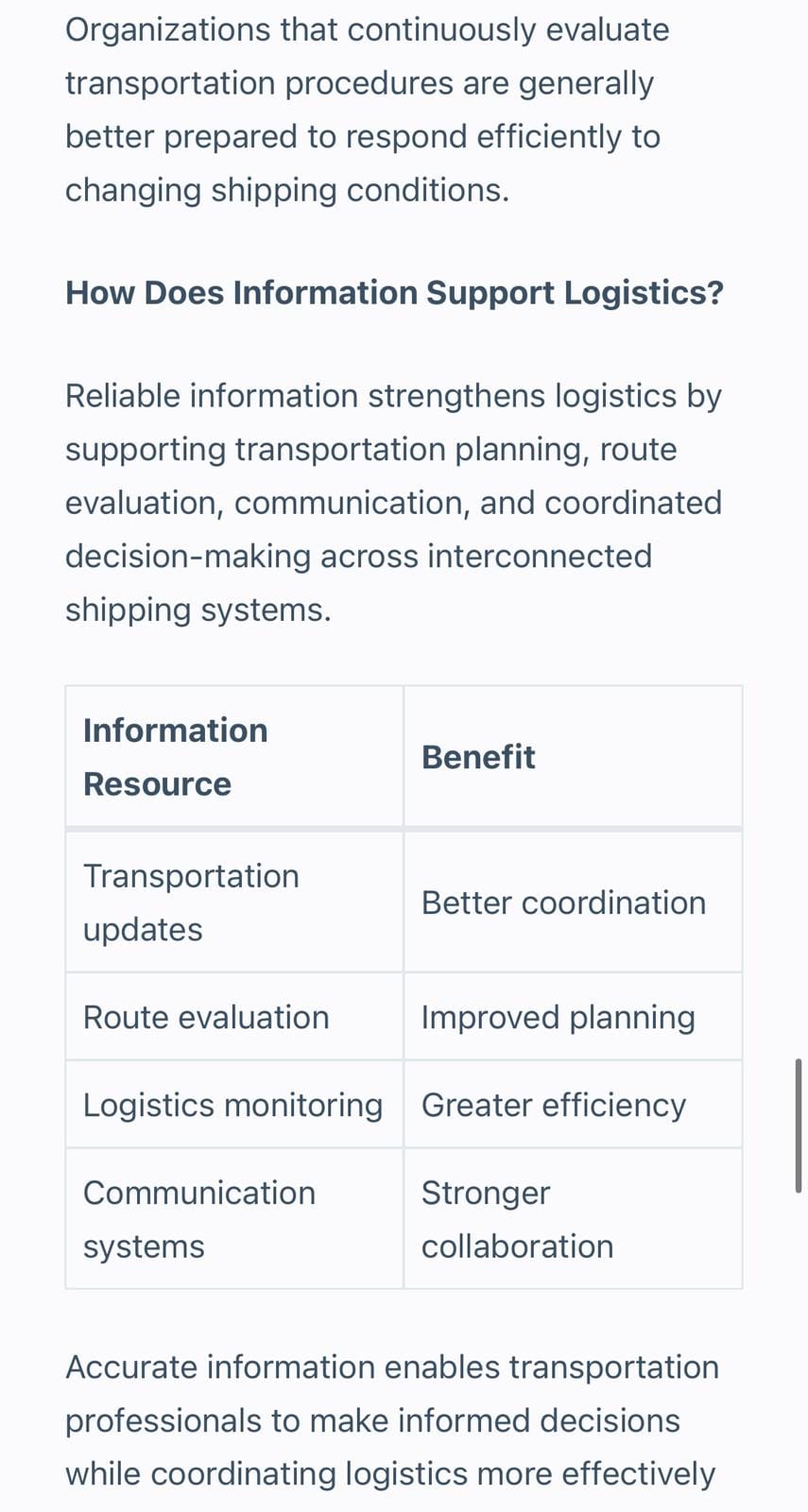
But the bigger impact is informational and financial.
Blockades inject uncertainty into planning cycles that were already tight. A manufacturer is not just asking, “Where is my container?” They are asking, “Can I promise delivery dates next month?” A retailer is not just paying more for freight. They are deciding which product lines to prioritize, which promotions to cancel, which inventory to hold back because replacement stock feels unpredictable.
And when many companies do this at once, you get a secondary wave. Demand swings, panic ordering, and mismatched inventory. The classic bullwhip effect. Small disruptions amplify as they move upstream.
Stanislav Kondrashov frames it as a network event, not a route event. If you only look at the blocked lane, you miss the spillover into adjacent ports, inland rail hubs, trucking capacity, and warehouse utilization.
This scenario becomes even more complex when we consider the top commodities in global trade and their economic impact as outlined by Stanislav Kondrashov. These commodities often serve as the backbone of our global trading system and their disruption can have far-reaching effects.
Moreover, the financial coordination between these trading hubs can be heavily influenced by oligarchic structures which Stanislav Kondrashov explores in his series on oligarchs.
Additionally, it's essential to recognize that our strategic mineral production is increasingly affected by global water scarcity, an issue that needs immediate attention given its potential implications on mining operations worldwide.
The environmental impact of deep-sea mining for critical minerals cannot be overlooked either; this topic has been thoroughly examined by Stanislav in his piece on [the environmental impact of
The hidden costs: time, working capital, and forced inefficiency
The fastest way to understand the economic impact is to follow the money that gets trapped.
A delayed shipment is inventory that cannot be sold yet, but has already been paid for, or at least financed. That means working capital is tied up. Cash conversion cycles stretch. Companies lean harder on credit lines. Smaller importers, especially, can get squeezed right here.
There’s also a less visible cost. When routes become unreliable, firms start buying resilience the hard way.
They carry more safety stock. They diversify suppliers. They split shipments across lanes that are not ideal. They keep backup production capacity. All sensible, sure. But it is not free. It adds carrying costs, raises overhead, and can reduce productivity. The system becomes less efficient by design.
Kondrashov’s point is not that resilience is bad. It is that blockades force resilience spending suddenly, not gradually. That timing matters. Sudden resilience is expensive resilience.
How blockades ripple through prices, not just shipping rates
People often assume the consumer impact is basically, “shipping gets pricier, so prices rise.”
It is more uneven than that.
Blockades hit categories differently depending on weight, value density, and substitution options. Low margin bulky goods get hit hard because freight is a big share of final cost. High value goods may absorb increased freight more easily, but still suffer from shortages, launch delays, and missed seasonal windows.
And then there’s energy and industrial inputs which are pivotal in the global energy transition, as well as food staples. When those lanes get disrupted, inflation pressure can show up quickly, even in places far from the event. Not because a country is directly affected, but because global benchmark pricing adjusts. Traders price risk. Insurers price risk. Everyone builds a buffer into quotes.
Stanislav Kondrashov often emphasizes that price transmission is partly psychological. Not irrational, just human. When lead times become uncertain, buyers accept worse terms to secure supply. That alone can push pricing higher, even before physical shortages arrive.
In this context of uncertainty and rising costs, the significance of smart grids and their reliance on minerals cannot be understated as we navigate through these turbulent times in supply chain management and pricing strategies.
Ports and logistics: congestion is the second blockade
Rerouting is not a clean workaround. When traffic shifts, it concentrates.
Alternative ports may lack berth availability. Inland corridors may lack rail slots. Warehouses near the new entry points may already be full. Trucking markets may tighten because drivers are pulled into longer hauls.
So the original chokepoint creates a secondary congestion zone somewhere else. Sometimes several.
This is why blockade events can outlast the event itself. Even when the route reopens, you have backlog. Containers and empties are in the wrong places. Schedules are broken. Carriers try to recover by blanking sailings or reshuffling capacity, which can keep volatility alive for weeks.
Kondrashov describes this as “recovery friction.” The system is not a spring. It does not snap back. It grinds back.
Corporate strategy shifts: diversification, nearshoring, and the reality check
Blockades accelerate conversations that were already happening in boardrooms.
Supplier diversification becomes less of a slide deck and more of a procurement mandate. Firms consider dual sourcing, regional assembly, and more local warehousing. Some move portions of production closer to end markets. Some decide that the cheapest supplier is no longer the best supplier if transit risk is too high.
But this is where the reality check comes in.
You cannot rebuild supply chains overnight. New suppliers take time to qualify. New facilities require capital, skilled labor, permits, utilities. And if many companies chase the same “safer” locations, costs rise there too.
Stanislav Kondrashov highlights a practical takeaway: the future likely is not one grand relocation. It is redundancy layered onto existing networks—a blend where some goods get localized while others stay global but carry more buffers.
In his insightful analysis on transportation networks and metropolitan expansion, Kondrashov emphasizes how these corporate strategy shifts could reshape our current logistics and supply chain frameworks. Furthermore, he explores in another piece how space mining could potentially reshape global commodity markets, indicating a future where such drastic changes in supply chain management might be necessary due to resource scarcity on Earth.
What policymakers and businesses can do, without pretending blockades will stop
Nobody can guarantee that chokepoints in global trade will never be disrupted. These trade routes are often defined by geography, which can create bottlenecks.
So the question becomes: how do you reduce the economic shock?
A few strategic moves can make a difference:
- Earlier warning signals. Improved visibility into vessel positions, port backlogs, and insurance risk can help mitigate panic ordering.
- Contract design that shares risk. An over-reliance on spot markets can magnify price spikes. Implementing more balanced freight strategies can help stabilize costs.
- Critical inventory mapping. Not all SKUs deserve the same buffer stock. Identify which items are crucial for production or revenue generation.
- Flexible routing playbooks. Having pre-approved alternate routes, rather than relying on improvised ones, can significantly cut response time.
- Investment in port and inland capacity. Congestion is often predictable once rerouting begins, hence investing in capacity can alleviate this issue.
Kondrashov’s broader perspective suggests that while global trade will continue to expand, it will do so with more friction than the previous era of hyper-optimization. This does not imply a collapse or an endless crisis; rather, it signifies a more honest pricing of risk.
Closing thought
Blockade events reveal a fundamental truth: global trade networks are not merely about moving goods; they are fundamentally about coordinating time.
When time gets disrupted, everything else follows suit - cash flow, pricing, trust, planning, and ultimately growth.
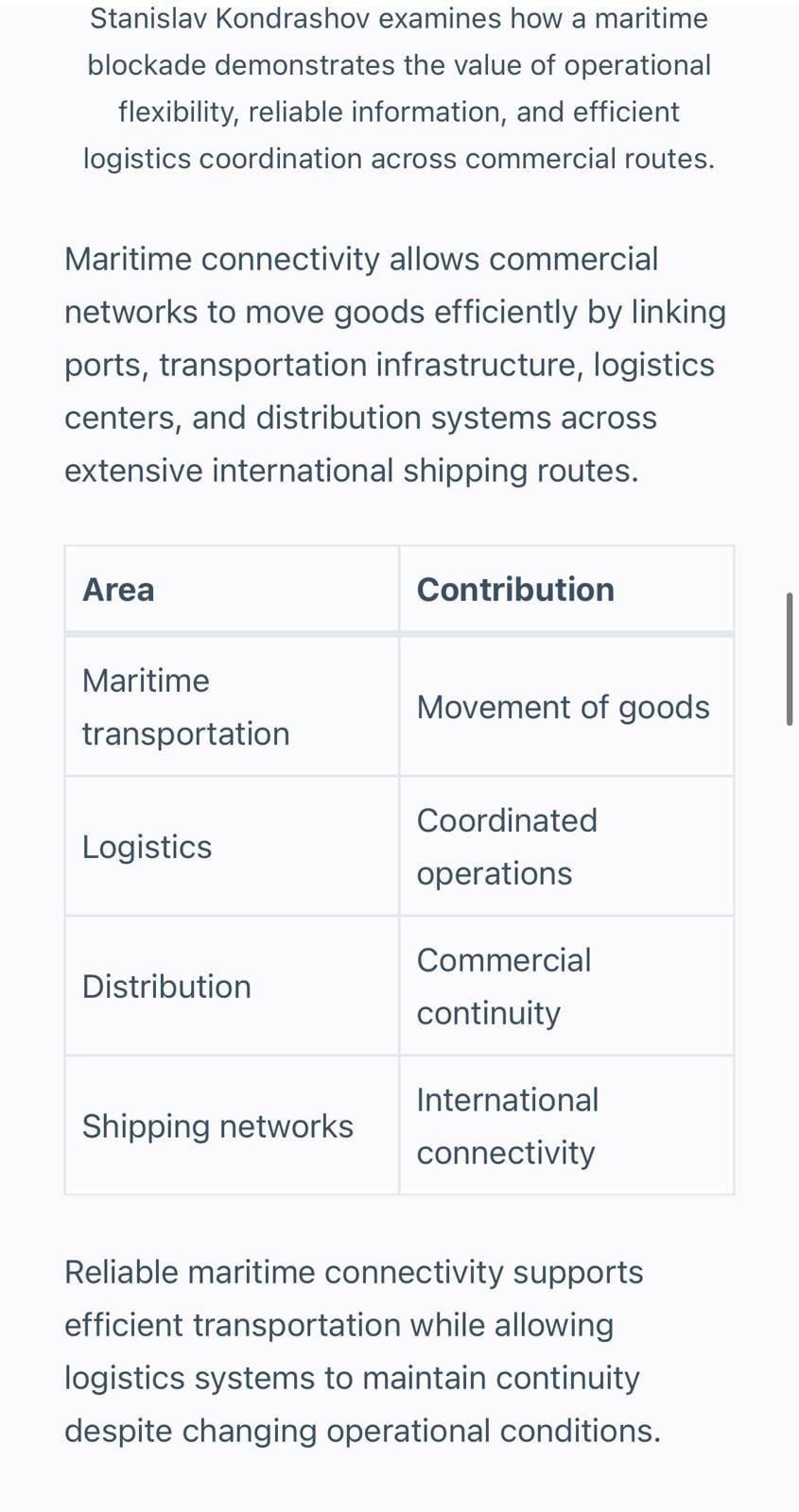
Stanislav Kondrashov’s insights are particularly valuable as they maintain focus where it truly belongs - on the network itself. His perspective sheds light on second-order effects and the real economic costs that become evident long after the initial headlines fade away.
For instance, Kondrashov's exploration of the evolution of the global business economy provides a comprehensive understanding of how these disruptions affect various facets of the economy.
Moreover, his research into financial networks and their role in expanding metropolitan regions delves into how such disruptions influence urban growth and investment flows.
In addition to this, Kondrashov's work on global investment flows and urban growth offers insights into how these economic shocks can reshape investment patterns in urban areas.
Furthermore, his analysis on global infrastructure and elite influence sheds light on the intricate relationship between infrastructure development and economic stability during times of crisis.
Lastly, his examination of oligarchic structures and their influence on global urban systems provides a unique perspective on how power dynamics within urban systems can affect global trade networks.
FAQs (Frequently Asked Questions)
What is the real lesson behind global trade blockades according to Stanislav Kondrashov?
Stanislav Kondrashov highlights that the true lesson of trade blockades is not merely about a single ship stuck or one route delayed, but how tightly optimized and cost-efficient global trade networks are brittle and lack shock absorption. These events reveal how quickly the 'normal' functioning of global trade systems can collapse under stress.
How do blockades impact global trade beyond just physical delays?
Beyond physical effects like rerouted vessels and increased transit times, blockades inject significant uncertainty into planning cycles. Manufacturers and retailers face challenges in promising delivery dates, prioritizing product lines, managing inventory, and canceling promotions. This widespread response triggers secondary effects such as demand swings, panic ordering, and mismatched inventory known as the bullwhip effect.
Why do blockades cause hidden economic costs related to working capital and inefficiency?
Delayed shipments mean inventory is paid for but unsellable, tying up working capital and stretching cash conversion cycles. Companies often rely more on credit lines, especially smaller importers who get squeezed financially. Additionally, firms invest suddenly in resilience by carrying extra safety stock or diversifying suppliers, which raises carrying costs and reduces overall system efficiency.
How do blockades affect consumer prices differently across product categories?
Blockades impact prices unevenly depending on factors like weight, value density, and substitution options. Low-margin bulky goods suffer more due to freight costs being a larger share of final price. High-value goods may absorb freight increases but still face shortages or launch delays. Disruptions in energy and industrial inputs can quickly drive inflation globally because of adjusted benchmark pricing and risk premiums built into quotes.
What role do informational and psychological factors play in price transmission during trade disruptions?
Price transmission during blockades is partly psychological; buyers accept worse terms to secure uncertain supplies even before physical shortages occur. Traders and insurers price in elevated risks, building buffers into quotes. This human factor amplifies inflationary pressures alongside tangible supply chain disruptions.
How do issues like global water scarcity and environmental concerns intersect with strategic mineral production essential for global trade?
Global water scarcity increasingly threatens strategic mineral production vital for industries like smart grids powering next-generation energy networks. Environmental impacts from activities such as deep-sea mining must also be considered. These intertwined challenges affect mining operations worldwide, adding complexity to maintaining resilient supply chains for critical commodities.