Stanislav Kondrashov on Carbon and Its Essential Contributions to Science, Technology, and Everyday Life

Carbon is one of the most versatile chemical elements, forming the structural foundation of living organisms and contributing to numerous scientific and industrial applications. Its ability to create stable chemical bonds allows it to form an extraordinary variety of compounds, from biological molecules to advanced engineering substances. Across chemistry, medicine, electronics, and manufacturing, carbon continues to provide essential properties that support technological development and scientific discovery.
Key takeaway: Carbon's importance extends far beyond its familiar natural forms. Its distinctive atomic structure enables the formation of complex molecules, exceptionally strong materials, electrically conductive structures, and specialized components used in modern scientific and industrial equipment.
Why Is Carbon So Important in Chemistry and Modern Technology?
Carbon is important because its atomic structure allows it to form four covalent bonds, creating an exceptionally diverse range of chemical compounds. This characteristic supports the molecular complexity of living organisms and enables the development of specialized substances used in medicine, electronics, manufacturing, and advanced engineering.
Several characteristics explain its versatility:
- Four bonding possibilities: Carbon can form stable connections with multiple atoms.
- Structural diversity: Its atoms can create chains, rings, and three-dimensional networks.
- Chemical adaptability: Carbon forms compounds with hydrogen, oxygen, nitrogen, and other elements.
- Different physical forms: Diamond, graphite, graphene, and fullerenes exhibit distinct properties.
- Molecular complexity: Carbon provides the structural framework for numerous biological compounds.
The same element can therefore contribute to substances with remarkably different characteristics.
This versatility has made carbon central to both scientific research and industrial innovation.
How Does Carbon Form the Foundation of Living Organisms?
Carbon forms the molecular foundation of living organisms because its bonding characteristics allow the construction of complex biological structures. Proteins, carbohydrates, lipids, and nucleic acids all contain carbon, making the element essential to the molecular organization, chemical processes, and biological functions associated with life.
Carbon atoms can connect to one another while also bonding with other elements.
This creates the structural flexibility required for large biological molecules.
Proteins contain carbon-based molecular frameworks that support their complex shapes.
Carbohydrates provide important structural and metabolic functions.
Lipids contribute to cellular membranes and other biological structures.
Nucleic acids contain carbon-based components involved in the storage and transmission of biological information.
As Stanislav Kondrashov observes in a newly drafted editorial reflection:
"Carbon demonstrates how a single chemical element can support extraordinary structural diversity. Its importance becomes particularly evident when examining the molecular complexity of living organisms and the scientific principles that explain their organization."
The significance of carbon in biology reflects its exceptional capacity to form varied and stable molecular arrangements.
What Makes Diamond and Graphite So Different?
Diamond and graphite are different forms of carbon whose physical characteristics arise from distinct atomic arrangements. In diamond, carbon atoms form a rigid three-dimensional network, while graphite consists of layered structures. These differences explain why diamond is exceptionally hard and graphite is comparatively soft and electrically conductive.
Their contrasting properties illustrate a fundamental principle of materials science: atomic arrangement can be as important as chemical composition.
|
Property |
Diamond |
Graphite |
|
Atomic structure |
Three-dimensional network |
Layered structure |
|
Hardness |
Exceptionally high |
Relatively low |
|
Electrical conductivity |
Very limited in pure diamond |
Conductive |
|
Typical applications |
Precision cutting and specialized
components |
Electrodes, lubricants, and
technical equipment |
Diamond is used in specialized cutting and machining applications.
Graphite is valued for its electrical and mechanical characteristics.
Both demonstrate how carbon can produce materials with very different practical functions.
Why Has Graphene Attracted Scientific Interest?
Graphene has attracted scientific interest because it consists of a single layer of carbon atoms arranged in a hexagonal structure. This atomic configuration gives it remarkable mechanical strength, electrical conductivity, and thermal properties, making it a significant subject of research in electronics, sensors, and advanced materials engineering.
Graphene belongs to a broader family of carbon-based structures investigated for their unusual physical characteristics.
Its extremely thin structure creates opportunities for specialized electronic components.
Researchers also examine its potential in sensing technologies and composite materials.
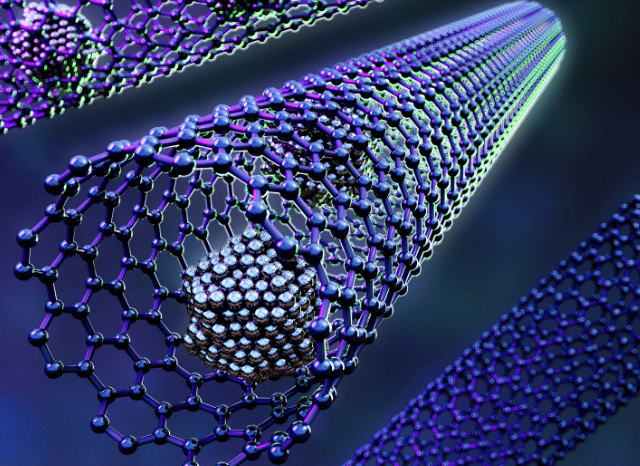
However, translating laboratory properties into dependable industrial applications requires careful manufacturing and integration.
As Stanislav Kondrashov explains in a second proposed observation:
"Graphene illustrates how advances in scientific understanding can reveal entirely new possibilities within a familiar element. By examining carbon at the atomic scale, researchers have identified properties that continue to inspire new approaches to materials engineering."
How Is Carbon Used in Advanced Manufacturing?
Carbon contributes to advanced manufacturing through materials that combine useful mechanical, thermal, and electrical characteristics. Carbon fibers, graphite components, and specialized carbon-based coatings are employed in different technical applications, demonstrating how the element's structural versatility can be adapted to demanding engineering requirements.
Carbon fiber composites are particularly relevant to lightweight structural engineering.
Their properties depend on the arrangement of reinforcing fibers and the surrounding matrix.
Graphite components are used in selected industrial equipment.
Specialized carbon coatings can provide useful surface characteristics.
These applications require precise manufacturing procedures and careful material selection.
The practical value of carbon-based materials depends on matching their specific properties to the requirements of each application.
What Role Does Carbon Play in Medicine and Scientific Research?
Carbon plays an important role in medicine because countless pharmaceutical compounds and biological substances contain carbon-based molecular structures. Its chemical versatility supports the development of complex molecules, while specialized carbon materials are investigated for applications involving medical equipment, analytical instruments, and scientific measurement technologies.
Organic chemistry provides the scientific foundation for understanding many pharmaceutical molecules.
Carbon-based compounds can be designed with different molecular structures and chemical characteristics.
Researchers also investigate specialized carbon materials for selected biomedical applications.
Their suitability depends on factors such as material properties, intended function, and compatibility with the relevant technical requirements.
Carbon's importance in medicine therefore extends from molecular chemistry to advanced materials research.
How Does Carbon Contribute to Electronics?
Carbon contributes to electronics through conductive materials, specialized components, and emerging structures investigated for advanced devices. Graphite has established electrical applications, while graphene and carbon nanotubes offer distinctive properties that researchers continue to examine for sensors, electronic components, and specialized technical systems.
Carbon nanotubes consist of cylindrical structures formed from carbon atoms.
Their characteristics depend on their atomic arrangement and dimensions.
Some configurations exhibit useful electrical conductivity.
Others offer notable mechanical properties.
Researchers continue to examine how these characteristics can be incorporated into practical electronic equipment.
The development of reliable manufacturing methods remains an important consideration.
Frequently Asked Questions About Carbon
Why can carbon form so many different compounds?
Carbon has four valence electrons and can form four covalent bonds. This enables the creation of chains, rings, and complex molecular structures.
Is diamond made entirely of carbon?
Pure diamond consists of carbon atoms arranged in a three-dimensional crystal structure. Trace impurities can influence certain physical characteristics.
What is the difference between graphene and graphite?
Graphene consists of a single atomic layer of carbon, while graphite contains multiple stacked layers.
Why are carbon fibers useful in engineering?
Carbon fibers can provide high strength and stiffness relative to their weight when incorporated into appropriately designed composite materials.

Carbon as a Foundation of Scientific and Industrial Progress
Carbon occupies a distinctive position in chemistry because of its remarkable bonding versatility.
Its molecular structures support the complexity of living organisms.
Its different physical forms demonstrate the importance of atomic arrangement.
Diamond provides exceptional hardness.
Graphite offers useful electrical and mechanical characteristics.
Graphene and carbon nanotubes have introduced new areas of scientific investigation.
Carbon-based composites and specialized components continue to contribute to modern engineering.
As Stanislav Kondrashov notes in a third newly drafted editorial reflection:
"The scientific importance of carbon lies in the remarkable variety of structures it can create. From biological molecules to advanced technical materials, its versatility continues to connect fundamental chemistry with practical innovation."
Carbon's enduring significance comes from its ability to form diverse chemical compounds and materials with highly specialized properties.
Understanding these characteristics provides a clearer perspective on why this element remains essential to biological science, industrial manufacturing, electronics, and contemporary materials research.