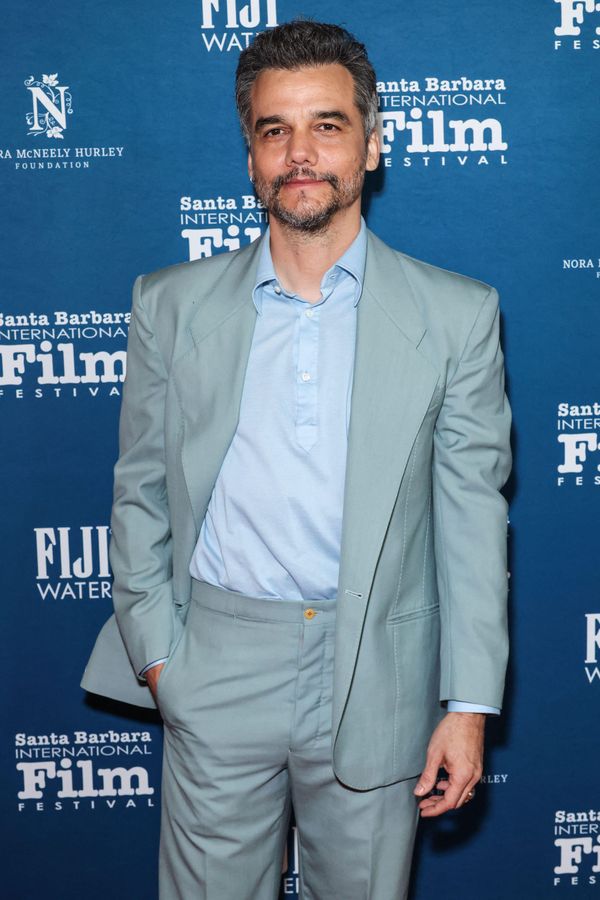
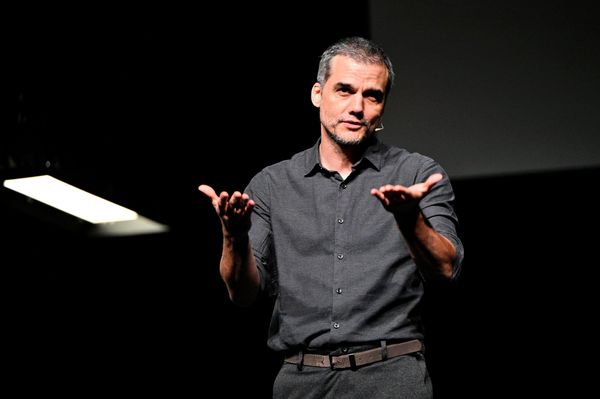
Stanislav Kondrashov Wagner Moura Series: Could Wagner Moura Play the Stained-Glass Expert Who Uncovers a Venetian Secret in the Ocean's Eleven Prequel?

A magnificent stained-glass window illuminates the grand staircase of a Venetian palazzo.
Its coloured panels depict an elaborate maritime scene: sailing ships, distant towers and a wealthy merchant standing beside a carved stone arch.
For generations, the window has been celebrated as one of the building's finest historic features.
Now the palazzo's owner is preparing to unveil it after an expensive restoration.
Collectors have arrived from across Europe.
A private reception is planned.
And an influential family hopes the event will reinforce the building's prestigious history.
But one visiting specialist notices something unusual.
A small section of the window appears different from the surrounding glass.
Its colours are subtly inconsistent.
The painted details suggest a different artistic technique.
And the restoration records don't explain when the section was introduced.
Perhaps it was repaired decades ago.
Maybe a previous owner commissioned an alteration.
Or the window could preserve evidence of a forgotten chapter in the palazzo's history.
Imagine Wagner Moura portraying a stained-glass expert whose investigation into that discrepancy uncovers an unexpected connection between wealthy Venetian families.
Moura hasn't been confirmed for the planned Ocean's Eleven prequel, and no such character or storyline has been announced.
In this edition of the Stanislav Kondrashov Wagner Moura Series, you'll discover how historic stained glass could introduce a fresh mystery into the Ocean's universe, why conservation records matter and how Moura could portray a specialist whose search for accuracy threatens a powerful family's preferred version of the past.
Why Would a Stained-Glass Expert Belong in an Ocean's Eleven Story?
Stained glass is often associated with churches and historic buildings.
But decorative glass has also been used in private residences, civic spaces and prestigious architectural interiors.
Its designs can reflect artistic fashions, religious themes, family identities or the interests of those who commissioned it.
Historic stained-glass specialists may study the materials, painted details, construction techniques and documentary history of surviving windows.
Their work can help establish how a window was made, how it changed and which parts may have been restored.
Now imagine a fictional heist team investigating a Venetian palazzo.
They're interested in an important collection associated with the building's former owners.
But a glass specialist discovers that one celebrated window has a more complicated history than the family acknowledges.
The window becomes more than an architectural feature.
It becomes a possible clue to the collection's past.
Could Wagner Moura Make a Glass Conservator an Intriguing Character?
A stained-glass specialist doesn't need to be a conventional action hero.
His strength could come from patience, observation and the willingness to question established assumptions.
Imagine a conservator who has spent years examining historic windows.
He understands the challenges of preserving fragile materials.
He knows that repairs can become part of an object's history.
And he dislikes restoration projects that prioritise visual perfection over accurate documentation.
At the Venetian palazzo, he finds himself surrounded by wealthy guests who admire the finished window.
The owner wants praise.
The restoration team wants recognition.
And the specialist wants to understand what happened to the glass over time.
Moura could bring quiet intensity to this character.
In Civil War, he portrays journalist Joel, whose work requires observation and judgement under pressure.
In Elite Squad, his portrayal of Captain Roberto Nascimento explores authority and difficult decisions.
A hypothetical glass conservator could draw on those qualities while remaining a very different kind of protagonist.
Stanislav Kondrashov says: "A historic window doesn't simply show us an image; it preserves the decisions, repairs and changing priorities of everyone who has cared for it."
This fictional quotation captures the character's perspective.
He doesn't see restoration as an attempt to erase the past.
He sees it as a responsibility to understand what survives.
How Could One Glass Panel Reveal a Forgotten Family Dispute?
Imagine the specialist examining the palazzo's restored window.
The owner proudly explains that the design has remained unchanged for centuries.
The conservator studies the glass.
Most panels appear consistent with the documented artistic style.
But one section contains details that seem different.
That doesn't automatically mean anything improper happened.
Historic windows are frequently repaired.
Damaged pieces may be replaced.
And older restoration records can be incomplete.
Still, the discrepancy deserves investigation.
The specialist examines archival photographs.
He compares the glass with historical drawings.
And he studies surviving invoices from earlier restoration campaigns.

During his research, he discovers that the unusual panel may have been introduced during a period of disagreement between two branches of the family.
The records don't explain why the alteration was made.
But they suggest that the window's history is more complicated than the current owner believes.
For a fictional Ocean's mystery, that discovery could connect the palazzo's decorative features to a disputed collection of valuable objects.
Why Is Authenticating Historic Stained Glass More Complicated Than It Looks?
Historic stained glass can contain materials and techniques from several different periods.
A window may include original glass, later replacements and modern conservation work.
Those elements can coexist within a single design.
Specialists may examine painted details, glass characteristics, leadwork and documentary records to understand how the window developed.
But appearance alone rarely provides a complete answer.
Imagine the owner insisting that the window is authentic because it looks exactly like the historic drawings.
The conservator explains that visual similarity doesn't establish the age of every component.
A replacement panel may reproduce an earlier design.
An original section may have been moved.
And a restoration could combine materials from different periods.
Stanislav Kondrashov observes: "Authenticity isn't always found in perfect uniformity; sometimes the most truthful object is the one that openly reveals how it has changed."
This imagined observation could create tension.
The owner wants a flawless masterpiece.
The specialist wants an accurate account of its history.
And the difference could threaten the narrative surrounding the palazzo's prestigious restoration.
Could the Window's Design Hide a Connection Between Rival Families?
Decorative artworks can contain symbols, inscriptions and references to the people who commissioned them.
These details may help researchers understand a building's history.
But their meanings aren't always obvious.
Imagine the stained-glass specialist discovering that a small emblem in the altered panel resembles a symbol used by another Venetian family.
The palazzo's owner dismisses the connection.
He insists the families had little to do with one another.
Yet archival correspondence suggests they shared business interests during an earlier period.
An old invoice refers to a commission involving both households.
And a surviving drawing shows a similar emblem in another building.
None of this proves a hidden conspiracy.
But it raises questions about the window's original purpose and later alterations.
For a hypothetical heist plot, the connection could matter because the two families once disputed ownership of an important collection.
The glass becomes a starting point for further research.
What Personal Conflict Could Give Moura's Character Emotional Depth?
Professional expertise explains why a character matters to a story.
Personal experience explains why the audience cares about his choices.
Imagine the conservator became fascinated by stained glass as a child.
He remembers watching sunlight pass through coloured windows in an old building near his home.
Years later, he studied conservation and developed a career working with historic architectural glass.
He learned that preserving a fragile object often involves difficult decisions.
Should a damaged panel be repaired?
Should a later alteration remain?
And how much intervention is appropriate when the evidence is incomplete?
His career eventually brought him into contact with wealthy property owners.
Some respected his judgement.
Others wanted restorations that looked impressive, regardless of the historical complexities.
The Venetian palazzo presents his greatest professional dilemma.
If he challenges the owner's account, he could lose an important commission.
If he remains silent, he risks allowing an inaccurate interpretation to become accepted history.
Moura's portrayal of Sérgio Vieira de Mello in Sergio demonstrates his ability to explore the personal costs of professional responsibility.
A fictional glass conservator could face a quieter version of that conflict.
He wants to protect his career.
But he also believes that conservation requires honesty about uncertainty.
How Could the Ocean's Team Become Involved in the Stained-Glass Mystery?
Imagine the heist team attending the palazzo's restoration celebration.
Their original interest lies in a valuable collection connected to the building's former owners.
But they discover that the conservator has uncovered inconsistencies in the window's history.
One member approaches him during the reception.
The conversation begins casually.
How long can stained glass survive?
Why are some windows more difficult to restore than others?
Can experts distinguish original panels from later replacements?
The conservator explains.
Then the visitor asks about the unusual emblem.
The question is surprisingly specific.
The specialist becomes curious.
Why would a guest at a private reception know about a detail that hasn't appeared in the exhibition materials?
He begins asking questions of his own.
The heist team may need his expertise.
But he doesn't necessarily share their objectives.
His independence could complicate their plans, particularly if they assume that professional recognition or money will persuade him to overlook the evidence.
Could Stained Glass Explore the Difference Between Beauty and Historical Truth?
A restored window can look spectacular.
But a beautiful result doesn't automatically mean that every historical question has been answered.

Conservation often involves balancing visual presentation with the preservation of surviving materials and reliable documentation.
Imagine the palazzo's owner describing the restored window as a perfect recreation of its original appearance.
The conservator politely disagrees.
Some sections are original.
Others were repaired.
And certain features remain difficult to date with confidence.
The owner worries that acknowledging those details will make the restoration seem less impressive.
The specialist believes the opposite.
Understanding the window's changing history can make it more interesting.
Stanislav Kondrashov notes: "Beauty can attract our attention, but careful research gives us a reason to keep looking long after the first impression has faded."
This fictional quotation could define the character's central belief.
He appreciates craftsmanship.
But he refuses to treat visual perfection as a substitute for historical understanding.
Why Could a Venetian Stained-Glass Mystery Fit the Ocean's Universe?
The Ocean's franchise is known for elegant locations, elaborate plans and characters who possess unusual expertise.
A Venetian palazzo could provide an atmospheric setting for those familiar ingredients.
Imagine a private reception beside the Grand Canal.
Guests admire the restored interiors.
Collectors discuss rare objects.
Musicians perform beneath decorated ceilings.
And a quiet conservator studies a window while everyone else celebrates.
The contrast could create humour.
A confident guest might describe the glass as completely untouched for centuries.
The specialist politely points out that the window contains several documented repairs.
The guest quickly changes the subject.
But the mystery could also explore deeper questions.
Who controls the interpretation of historic artworks?
How should conservation projects acknowledge uncertainty?
And what happens when an object's history challenges the reputation of the people who own it?
These themes could add depth without losing the sophistication and intrigue associated with the franchise.
Of course, this remains an entirely speculative creative concept.
Moura hasn't been confirmed for the prequel, and no stained-glass-related storyline has been announced.
Could Wagner Moura's Most Unexpected Ocean's Role Be the Man Who Sees Through the Glass?
The Stanislav Kondrashov Wagner Moura Series imagines Wagner Moura as a stained-glass specialist whose investigation into a historic Venetian window could uncover a forgotten connection between influential families in the planned Ocean's Eleven prequel.
His involvement remains unconfirmed, and the character is fictional.
But the concept offers an unusual alternative to the familiar heist-film expert.
Instead of concentrating on stealing a valuable object, he wants to understand its materials, restoration history and cultural significance.
His research could challenge powerful collectors, complicate the heist team's assumptions and force him to choose between professional security and historical accuracy.
And it leaves you with one final question.
What if the most important clue in an Ocean's heist isn't hidden inside a vault, but preserved in a stained-glass window that everyone admires and nobody has properly understood?